Curry Guide… Coriander

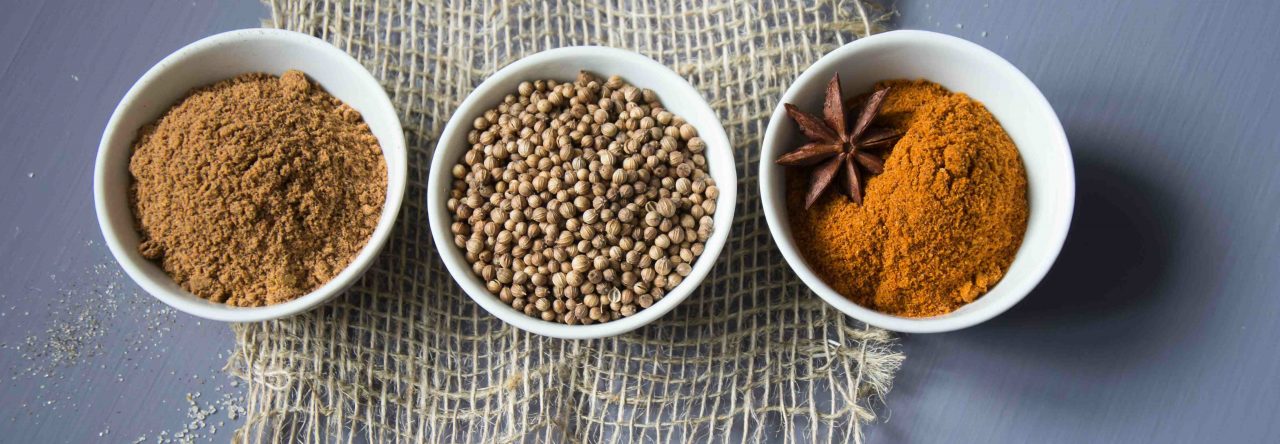
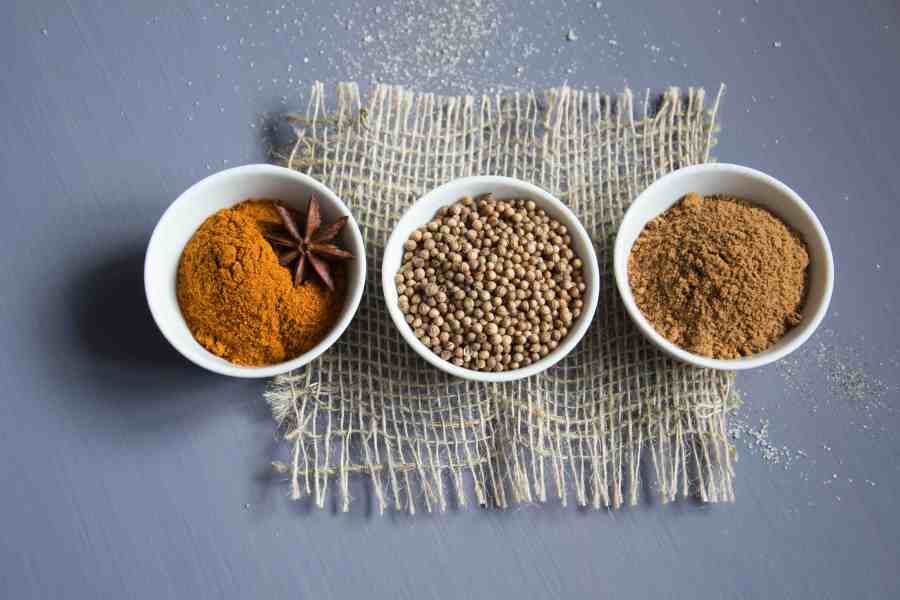
IMG_0651Coriander is one of the most important spices in Indian cooking and is used as whole seeds (brown/cream colour), ground (brown) and fresh leaves (as pictured). The seeds give a slightly sweet flavour while the leaves are pungent and add a distinctive taste to many well-known curries. The leaves can be mixed into curries (the stems give the strongest flavour) or added to the top for garnish (or often both). To release the flavours and aromas of the coriander leaves it is best to bruise them gently with your fingers and tear them into pieces with your hands rather than chopping them up using a knife.


The Spice Card offers savings on curries, including on takeaways at many venues. You can get your Spice Card here.

3D card image

Curry Guide… the Chef’s Region

IMG_6771
Do you want a curry that’s cooked to perfection? Next time you go for a spicy meal ask the waiter if the chef would recommend a special dish from the country or region he’s originally from.

Chefs can, of course, cook lots of different dishes from different regions, but they will almost certainly have perfected the dishes from the place where they grew up or learned to cook. Remember, the dish will not necessarily something from the menu under the header “Chef’s recommendations”.


The Spice Card offers savings on curries, including on takeaways at many venues. You can get your Spice Card here.

3D card image

Curry Guide…Whisky and Curry

Fancy a change from beer with your curry? The spices in whisky make it an ideal drink to accompany your favourite spice dish. Try the smoky blend Johnnie Walker Black or the super peaty Islay single malt Laphroaig with Chicken Tikka Masala for instance.

serveimage-3Whisky and curry go together remarkably well. The spicy notes – cinnamon, nutmeg, ginger, pepper, cloves among others – are central to the aroma and taste of many whiskies while a host of the other tastes you associate with your favourite curry can be found too. In whisky you’ll also find creamy smoothness (Korma dishes), smokiness (Tandoori), sweetness (Dhansak), vanilla (Kulfi), nuttiness (Pasanda), zestiness (Achari) aniseed (Goan fish dishes), as well as saltiness, fruitiness and slight oiliness.

There’s a lot of snobbery associated with whisky (as with wine) but just as you don’t choose your favourite beer with an elaborate performance of swirling, staring and sniffing nor do you have to do so with whisky either. See the boxes for some ideas of Indian dishes and whiskies but don’t be afraid to experiment and see what works for you. A few select whiskies and a selection of dishes from your favourite takeaway can make for a great night at home with friends.

Classic dishes and popular whiskies 

• Butter chicken, with its creamy, tomato base works well with the vanilla smoothness of America’s favourite, Jack Daniel’s. No Coke!

• The strong and powerful smokiness of popular blend Johnnie Walker Black is needed to compete with the extra hot spiciness of Lamb Madras.

• Famous Grouse combines spiciness with sweetness (from its fruit tastes) something that fans of a Prawn Dhansak will recognise and enjoy.

• Biryanis are dry but highly aromatic and need a light and sweet whisky that will not fight the subtle aromas of whole spices used in the dish. Go for a Bell’s.

• Kormas or Pasandas, with their creamy and nutty tastes, both work well with the easy, smoothness of Ireland’s triple-distilled Jameson. Any idea why it’s a favourite for Irish coffees?


Advanced tasting menu

Starter: Onion bhaji and Glenkinchie 10 Year Old. A classic, simple starter of sliced onion and gram flour that deserves a gentle accompaniment and this Edinburgh whisky is light but has a touch of spice and ginger.

Lamb: Lamb Tikka and Caol Ila (pronounced Cal-le-la). The tandoor-cooked lamb needs something as strong and smoky as the single malt Caol Ila (it’s the lead whisky in Johnnie Walker Black) with its hint of pepper and spice.

Chicken: Achari Chicken and Tullamore Dew. This Irish blend offers spicy and lemon flavours, ideal if you like your chicken cooked in tangy pickles.

Vegetable: Mutter Paneer with Wild Turkey. The smoothness of the cheese needs a smooth whisky and this famous Kentucky Bourbon provides that, but also adds hints of spices including cinnamon.


The Spice Card offers savings on curries, including on takeaways at many venues. You can get your Spice Card here.

3D card image

Curry Guide… Tandoori Chicken

Tandoori Chicken is a now popular dish across the world but it has its roots in the region that today comprises Afghanistan, Pakistan and northwest India. The chicken is marinated in yoghurt and a mix of tandoori spices, then cooked in a tandoor oven, with the heat from the wood or charcoal giving the dish its trademark smokiness. The edges of the chicken are often slightly charred and the meat is scored (this was the allow the marinade to penetrate deeper).

Tandoori Chicken Gurkha's InnThe red colour of the meat comes from the cayenne pepper, red chilli powder and turmeric in the spice mix, although some chefs add food colouring. In recent years there has been a backlash against the use of this red colouring and the days of Day-Glo looking chicken are slowly becoming a thing of the past.

Tandoori Chicken is a popular starter with chutneys and makes a great snack with a Butter Nan.It also serves the base for a number of curries such as Butter Chicken. The chicken is often served to the table sizzling and for that reason it is sometimes called a Sizzler.


The Spice Card offers savings on curries, including on takeaways at many venues. You can get your Spice Card here.

3D card image

Recipe… Handi Chicken

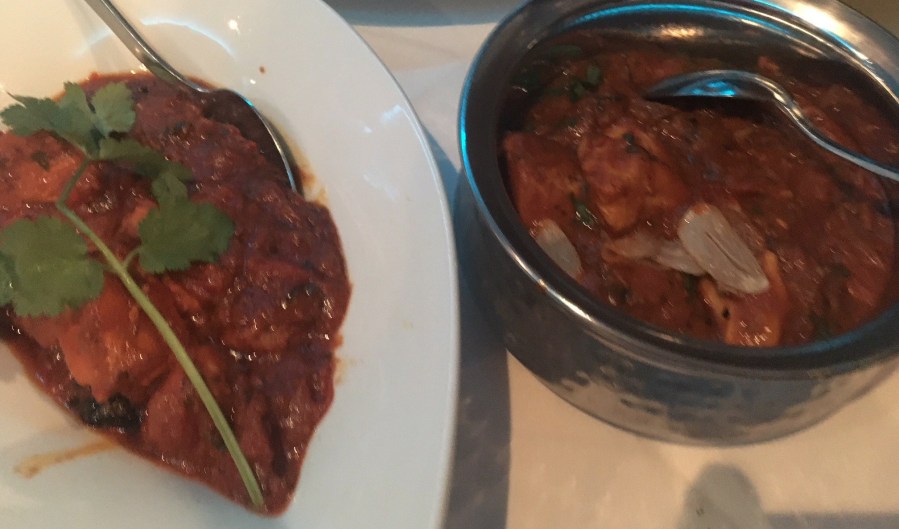
Handi Chicken.jpg

Handi Chicken
Serves 4

What you need
• 3 tsp ghee
• 1 tsp cumin seeds
• 1 tsp coriander seeds crushed
• 3 whole chillies
• 3 onions sliced
• 2 tsp ginger paste
• 5 cloves garlic finely chopped
• 1 tsp turmeric powder
• 1 tsp coriander powder
• 1 tsp chilli powder
• 1 tsp dried fenugreek
• salt to taste
• 750g chicken cut into bite-sized chunks
• 5-6 tomatoes chopped
• 1½ cup plain yoghurt
• 1 cup cream
• Handful of fresh coriander, chopped

How you cook it
1. Heat ghee in a pan.
2. Add the cumin seeds, crushed coriander, whole chillies and fry for 20 seconds (to test if ghee is hot enough put in one cumin seed. It should sizzle immediately).
3. Add the onions and fry until they are golden brown.
4. Add the ginger paste, chopped garlic, turmeric powder, coriander powder, chilli powder, dried fenugreek, salt and stir well.
5. Add in the chicken and cook until all the pieces are white (but not fully cooked). This should take about five minutes.
6. Add in the tomatoes and cook for 10 minutes.
7. Add in the yoghurt, cream and most of the fresh coriander (keep a small bit for the garnish), stir well and cook for 2-3 minutes. Ensure that the chicken is cooked through.
8. Once ready put into a serving bowl and garnish with the remainder of the fresh coriander.
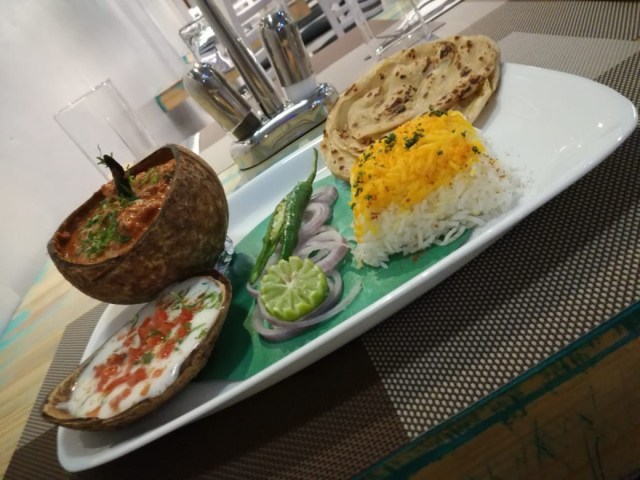
9. Serve with rice, chapati and a yoghurt and tomato raita.

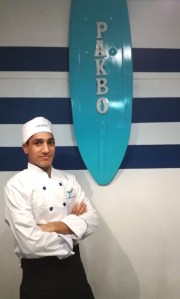
Kedar
Recipe by Kedar Chandra, chef at Pakbo restaurant in Flic en Flac, Mauritius.


The Spice Card offers savings on curries, including on takeaways at many venues. You can get your Spice Card here.

3D card image

How much do people spend on a curry?

In a recent survey we asked: “How much do you expect to spend when you visit an Indian restaurant per person, including drinks?”

More than half of people (58%) said they’d be looking at over £25, while 24% were settling for a nice £21-24 and 16% just £16-£20. Some 2% reckon they can get out for a curry in a restaurant for under £15. Must be a fun night that one!

The Spice Card offers savings on curries, including on takeaways at many venues. You can get your Spice Card here.

3D card image

The most popular hot curries

In a recent survey we asked: “How hot can you go with your curries?”

The Goan classic, Vindaloo was a narrow winner with our spice heads, just pipping that perennial favourite Madras, which was preferred by 29% of curry fans. The super hot Phall polled 19% among the serious heat lovers, while another 19% said they couldn’t eat anything that hot. Korma or Chicken Tikka Masala it is for them then.

Spice Card holders can enjoy a 20% discount on curries, including on takeaways at many venues. Get your Spice Card here…

3D card image

The most popular Indian bread

In a recent survey we asked “When it comes to bread in an Indian restaurant what do you go for?”

The runaway winner with 53% of people was the good old classic Nan. Perfect for mopping up that delicious sauce no doubt. Some 27% plumped for another type of nan (Peshwari, Keema, Garlic etc), while 20% prefer Chapati/Roti.

Spice Card holders can enjoy a 20% discount on curries, including on takeaways at many venues. Get your Spice Card here…

3D card image

Bexleyheath, Kent (Masala Inn)

Masala Inn, Bexleyheath

99018BCB-6484-45CD-8C8A-088B9A6B9E3B

Out on tour then, eh?
Indeed, right to the fringes of London for this trip. But it’s a really good restaurant and worth the trip. I’ve been here before and thought a second visit was in order.

What did you order?
The pan-fried Scallops and Chilli Ponir to start. The lightly spiced scallops were the business and perfectly cooked. The nice, chunky Ponir was certainly home-made and moreish enough and I could have done with more. The fresh chopped chillies were gobbled up.

Sounds like a good start. What came next?
The Railway Chicken. I’ve had it before and it just had to get a second tasting. The dish is served on the trains of India and with 16 million travellers using them every day it’s fair too assume the dish has been served a fair few times over the years. There is no standard recipe for a Railway Curry because there are thousands of kitchens serving the travellers across the country (although the India Railways did attempt to standardise dishes served on the railways in 2009). Similarly, you’ll find variations from restaurant to restaurant, although all of them are generally thick with chunky ingredients and rustic in style.

Is it hot?
No, Railway Chicken is medium-hot but if you want real heat then look no further than Garlic Naga Chicken. With the fiery sauce from the tiny north-eastern Indian state added to slices of the heat-giving garlic you’ll soon be looking around for a swig of Cobra. Of course, if you are silly enough to order a Chilli Nan to go with it, then you’ll need an extra swig.

Surely no one is daft enough to do that?
Ahem, er no, of course not.


Price check
Drinks: Cobra (pint) £5.50
Popadoms: 75p each
Starters: Scallops £5.95, Chilli Ponir £5.50
Mains: Railway Chicken £11.95, Garlic Naga Chicken £8.75
Rice: Pilau Rice £2.60
Nan: Chilli Nan £2.65

Masala Inn, 220 Broadway, Bexleyheath, DA6 7AU.
Tel: 020 8303 5245 (reservations)

Open
Monday–Thursday 5pm to 11pm
Friday– Saturday 5pm to 11.30pm

You can enjoy savings on food at the Masala Inn with the Spice Card. Get your Spice Card here…
Sunday noon to 2.30pm and 5pm to 11pm

Liss, Hampshire (Madhuban)

Madhuban, Liss, Hampshire
IMG_0792

Ok, where’s this place?
It’s a village of about 6,000 people, about 20 miles north of Portsmouth.

What’s its Indian restaurant like?
It’s actually got two but Madhuban is the famous one.

Famous?
Absolutely, people travel from far and wide to eat here and the curry guru Pat Chapman raves about the place. He even named it as one of the top restaurants in the country in his Cobra Good Curry Guide.

Have you been here before?
Been here before? I came here the year it opened in 1987 and have been coming here whenever I’m in the area ever since.

Wow you must have seen some changes?
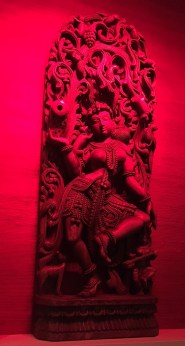
You bet. It was a 30-seater restaurant when it started and now it has 130 covers. It’s well designed, with a modern bar and waiting area and side-lit carvings of classical dancers (Bharat Natyam) and plants in the wall recesses. It was even packed on my last visit on a Wednesday night. It felt like everyone turned up at the same time which meant the service was a bit slow but it was still as friendly and warm as the first day I visited the restaurant.

And so to the food then?
The Railway Chicken and Egg Curry is a nod to the famous food found on the Indian railways. I’ve had it a few times. It’s thick with meat, vegetables and sauce, with a boiled egg in the middle. Rustic, just as it should be. The Chicken Tikka Darjeeling Masala is also highly recommended, with green tikka a great change (and very fresh tasting). According to the menu, the dish is in tribute to the garden in the Bangladeshi home of Lodue, the man behind the Madhuban. The Achari Chicken and Kashmiri Pilao (with lychees) was also devoured, as was the Madhuban Special Chicken, which  is a combination of the flavours of Bhoona, Korma and Tikka Masala.

What else is on the menu?
Maybe you should ask what isn’t on the menu! It’s one of the biggest menus I’ve every seen – and I don’t mean just the printed menu, which is a large-format eight-page masterpiece of information on dishes and spices. There are something like 150 menu options (I gave up counting after page three) and a promise to try to make anything that’s not on the menu if you ask!

The chefs must be superhuman.
They certainly do a top job with all those options. Everything on our table of eight was very good. The bill, including drinks, came to just over £160.

What’s the damage?
Drinks: Cobra (draught) £3.95 (large bottle) £4.75, white wine (large glass) £5, Lemonade (pint) £3.50, Diet Coke or Lime and soda (small) £2.50
Popadoms: 60p each and 60p each for pickles
Starter: didn’t have any
Mains: Zeera Prawn Masala £11.50, Chicken Tikka Darjeeling Masala, Achari Chicken, Railway Chicken and Egg Curry £10.95, Madhuban Special Chicken £10.50, Jungli Maas Chicken £9.95, Rogon Chicken £9.50
Sides: Sag Paneer, Bombay Aloo £3.95
Rice: Mushroom Rice, Kashmiri Pilao £3.50, Pilao Rice £2.95
Nan: Keema Nan £3.95, Peshwari Nan £2.95

Madhuban, 94 Station Road, Liss, Hampshire, GU33 7AQ.
Tel: +44 1730 893363 or +44 1730 894372.

Open
Monday to Thursday: 5.30pm–10.30pm.
Friday: 5.30pm–11.30pm.
Saturday: noon–2.30pm and 5.30pm–11.30pm.
Sunday: noon–2.30pm and 5.30pm–10.30pm.