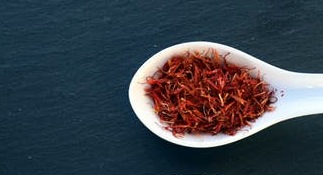
Saffron is a highly prized spice used for seasoning and flavouring, especially in Indian and Middle Eastern food. The delicate stigmas (or threads) are plucked from the saffron crocus and dried before use. Due to this intensive process to harvest just a few stigmas and the fact that it grows in only a few countries around the world, the cost of saffron is very high. So high, in fact, that the question “what spice is more expensive than gold?” has become a staple of nearly everyone who has leaned against a bar with a beer.
Oh, how we all love to exclaim: “saffron!” very loudly as if we have found the secret to the universe. It’s a ritual that’s made all the more fun because it’s not actually true (gold costs more than £32,000 per kg as compared to about £2,500 per kg of saffron)*
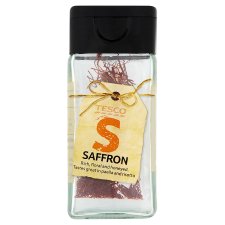
Saffron users are also going to need quite a bit of storage space to match its “weight in gold”. With a standard gold bar, as used by the bullion traders and banks, weighing 12.4kg you’re going to need a whopping 24,800 of these 0.5g packs that are sold by Tesco supermarket (at £2.50 each that would set you back £62,000)*.
But you’re certainly not going to need anything like that to spice up your food. Just a couple of strands is enough to add a beautiful flavour and aroma to your pilau rices, biryanis and kormas. The best way to use saffron is to put a couple of strands in a small amount of warm water or milk and press gently with the back of a spoon. This will release all the wonders of the spice, which can then be added to your dish.
The high cost of saffron means it is unlikely to be used in many restaurants. They will instead use the cheaper safflower, turmeric or colouring agents to try to mimic the properties of saffron.
Saffron is also know as zaffron or kesar (Hindi) and the largest producer of it is Iran, followed by Greece (where it was first cultivated), Morocco and Kashmir. Saffron has also been used for medicinal purposes and as a dye for clothes, its stigmas creating a colour which would have conferred status on the wearer due to its high cost.
* At 10 January 2019.
Photos: Pexels and Tesco.

 The poor old Korma gets a bit of a bad press in Britain. The obsession among some people in eating ever hotter curries means the Korma gets lumped with the “curry novices” tag because it is mild and creamy. And to be fair, the quick and easy Kormas some restaurants turn out have hardly done anything to raise its status. The pale dish that most diners are familiar with uses very little spice – garam masala and perhaps a little turmeric – which is mixed with puréed onions, garlic, cream, cream coconut and ground almonds.
 Coriander is one of the most important spices in Indian cooking and is used as whole seeds (brown/cream colour), ground (brown) and fresh leaves (as pictured). The seeds give a slightly sweet flavour while the leaves are pungent and add a distinctive taste to many well-known curries. The leaves can be mixed into curries (the stems give the strongest flavour) or added to the top for garnish (or often both). To release the flavours and aromas of the coriander leaves it is best to bruise them gently with your fingers and tear them into pieces with your hands rather than chopping them up using a knife.
 The dish was born in West Bengal (now part of Bangladesh) when the chefs, obviously without fridges in the Anglo-Indian days of the Raj, were forced to create dishes using leftover meats and other ingredients before they went to waste. With chicken being easy and quick to cook using the stir-fry method, it soon became the number one choice for Jalfezi.
 Whisky and curry go together remarkably well. The spicy notes – cinnamon, nutmeg, ginger, pepper, cloves among others – are central to the aroma and taste of many whiskies while a host of the other tastes you associate with your favourite curry can be found too. In whisky you’ll also find creamy smoothness (Korma dishes), smokiness (Tandoori), sweetness (Dhansak), vanilla (Kulfi), nuttiness (Pasanda), zestiness (Achari) aniseed (Goan fish dishes), as well as saltiness, fruitiness and slight oiliness.
 The red colour of the meat comes from the cayenne pepper, red chilli powder and turmeric in the spice mix, although some chefs add food colouring. In recent years there has been a backlash against the use of this red colouring and the days of Day-Glo looking chicken are slowly becoming a thing of the past.
 Are you fed up with the same old menu choices when you go out for a curry? Ask the waiter if you can try the Kitchen (or Staff) Curry – the curry the chef will have cooked for the staff to eat when the night’s work is over. This is unlikely to be a dish you will find on the menu; it’s most probably a dish from the home region of the chef and it will be different every day. There’s not always some spare but if there is then most restaurants are usually more than happy for you to try the dish. Obviously if you are eating early you may be out of luck as the Kitchen Curry may not be underway until later in the evening!

