Paradise Valley Masala Mix

Paradise Valley Masala Mix
(by Richard, Durban correspondent)

Lets start off by saying that I make a traditional Masala without the  chillies, but have modified it to extend the bite by looking further  East. Like all masalas, it’s very individual and the combination I enjoy. Szechuan peppers have an affinity for  chilli and affect the palate, accentuating the flavour and bite of the chilli, so that’s become my secret ingredient over the years. Feel free to experiment.

Here’s my concoction…

• 5 pods 2ml white cardamon (Elachi)
• 4-5 pods black cardamon (Black Elcha/Barra Elachi)
• 3 leaves finely chopped fresh Bay leaves
• 2 x 2,5 cm cinnamon sticks (or +/- 0.75 tsp powdered)

• 40 ml coriander seeds
• 10 ml fresh ginger finely chopped (or 1.5 tsp of ginger powder) 

• 12-14 whole cloves (or +/- 0.75 tsp clove powder)
• 7.5 ml black cumin seeds (Shajeera)

• 15 ml cumin seeds (Jeera)
• 40 ml coriander seeds
• 10 ml fresh Ginger finely chopped (or 1.5 tsp of ginger powder) 

• 15 ml mixed pepper corns
• 10 ml Szechuan peppers
• 3 ml mustard seed.

Heat a heavy based pan or skillet and gently dry roast all the ingredients until they darken. (do this very slowly and don’t burn it). Allow to cool. Husk the cardamon pods and place the seeds back with the other ingredients. Grind all to a fine powder (use a clean coffee grinder). Store in an airtight container in a cool cupboard.

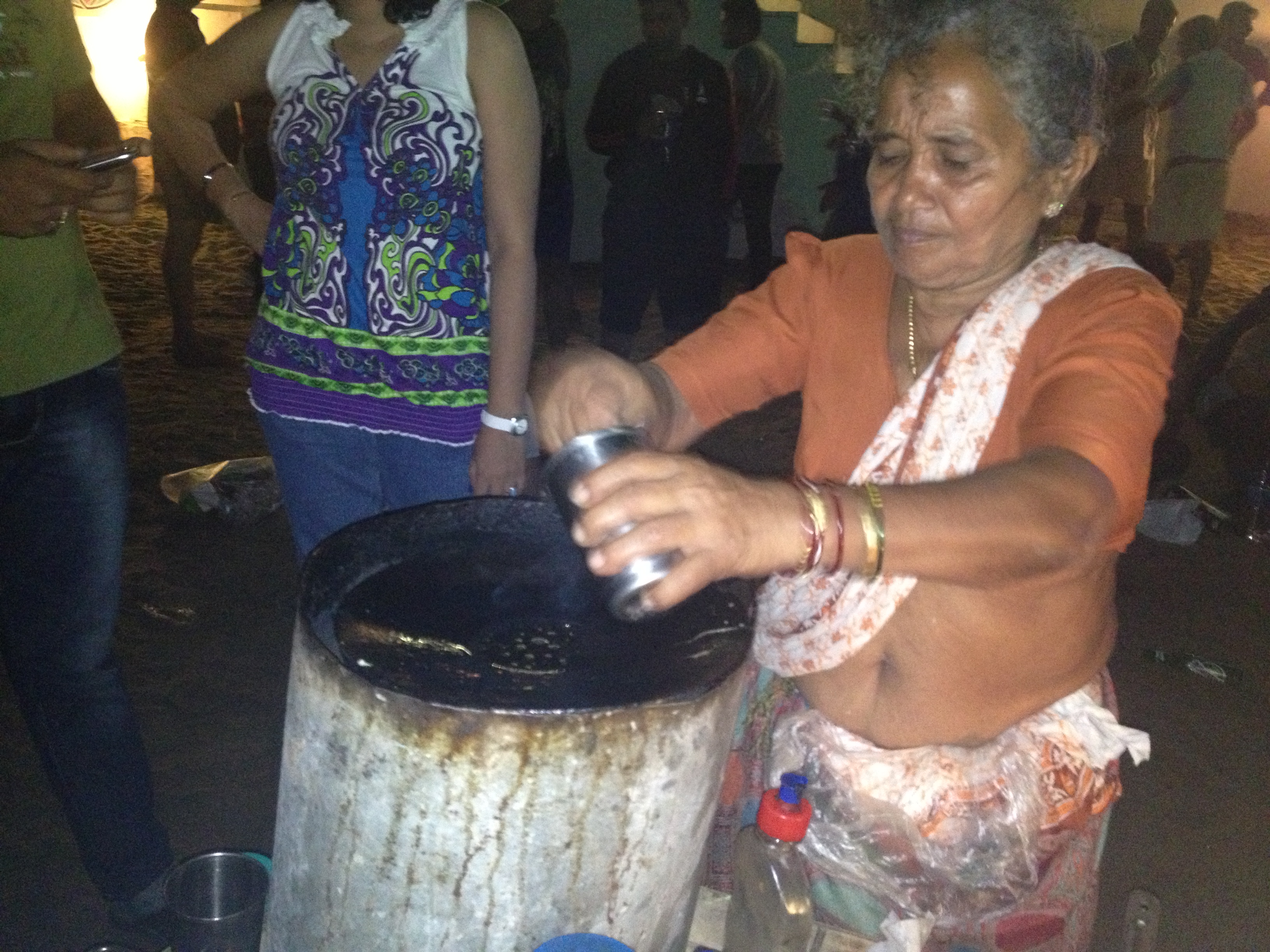
Masala omelette

Masala omelette

I discovered this on the beaches of Goa at about three in the morning. It certainly helps the munchies late at night but also makes a nice, spicy breakfast snack.

Serves: 1. Preparation and cooking time: 10 minutes

• Knob of butter or oil
• 1/2 clove garlic
• Two eggs (duck eggs are great)
• 1/4 cup of milk
• 1/2 red chilli and 1/2 green chilli chopped (double if you really like it hot)
• Pinch of salt and pinch of pepper
• Coriander, chopped to garnish

1. Whisk eggs with milk, add chilli, salt and pepper and mix.
2. Heat butter over a hot heat.
3. Fry garlic for 20-30 seconds.
4. Tip in the egg mixture and cook, tipping the pan regularly so the omelette is evenly cooked.
5. Garnish with coriander and serve with a spoonful of lime pickle.

Masala omlette on the beach
Masala omlette on the beachphoto

Durban curried bar snack

Richard, our Durban correspondent (South Africa’s tropical coastal city is home to the Bunny Chow) has reported on a new bar snack he has invented to go with stout or ale. These Durbanites certainly like everything curried.

1. Choose your own bread. Thick cuts of semi-wholewheat are recommended.
2. Add butter and the secret ingredient, a thick onion marmalade to the bread.
3. Add a thinly chopped mild curry achar.
4. Slap them together to create a sandwich.
5. Chow* down, washing every other mouthful down with a healthy swig of stout.

* Chow is a South African word meaning ‘eat’.

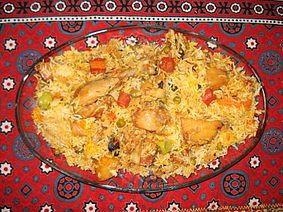
Recipe… Sindhi Biryani

Sindhi_Biryani (Wiki).JPG

Sindhi Biryani
Serves 5
Cooking time 40–45 minutes

What you need
• Chicken ½ kg
• Rice 300 gm
• Plum 100 gm
• Whole mix spice as required
• Big green chillies 5–6
• Mint leaves ¼ bunch
• Coriander leaves ¼ bunch
• Potatoes 3–4
• Yellow colour as required
• Tomatoes 4
• Lemon sliced 2
• Onion 2
• Turmeric 1 tbsp
• Chilli powder 1 tbsp
• Rose water 3 tbsp
• Ghee 1 cup
• Ginger garlic paste 2 tbsp
• Yogurt 250 gm
• Nutmeg powder ½ tsp
• Salt to taste

How you cook it
1.
Peel potatoes, cut into cubes and boil with a little yellow colour and water as required.
2. Now remove the slightly boiled potatoes and shallow fry with a little oil. Then remove potatoes and keep aside.
3. In a pan heat ½ cup ghee, add 2 chopped onion and fry till golden brown. Then add 2 tbsp ginger garlic paste and ½ kg chicken.
4. Fry well on high flame till chicken is a little tender.
5. Simmer the flame, add 1 tbsp chilli powder, 1 tbsp turmeric, salt to taste and whole spices as required. Cook for 2–3 minutes.
6. Now add 250 gm yogurt and mix well.
7. Also add fried potatoes, cover and simmer on low flame for 10 – 15 minutes.
8. Now add 4 tomatoes cut into halves, 100 gm plum, ¼ bunch coriander leaves, ¼ bunch mint leaves and 5 – 6 green chillies. Turn the flame off.
9. Boil water in a pan, add a little salt and 300 gm rice, boil rice till tender.
10. Spread boiled rice on top of chicken mixture.
11. Now spread ¼ cup melted ghee on top of rice, dissolve a pinch of yellow colour in rose water, spread on top of rice.
12. Sprinkle ½ tsp nutmeg powder on top and simmer on low flame for 8–10 minutes.
Recipe courtesy of Zaynub Mahmood
Photo: Miansari66 Wikipedia

Prawn or Fish Curry (quick and easy)

Prawn or Fish Curry (quick and easy)

Prawns are delicious in curry, giving a firm bite and a gorgeous taste. Raw prawns need between eight and 15 minutes to cook depending on size. Cooked prawn merely need to be heated through and will take just a few minutes.

Ingredients (serves four)
• 675g peeled prawns or fish cut into chunks
• 485g Madhuban sauce*
• 2 tbls finely chopped coriander (optional)
• A few toasted almond flakes to garnish (optional)
• A few curls of fresh coconut to garnish (optional)
• A few coriander leaves to garnish (optional)

Method (cooking time five to eight minutes)
1. Thoroughly mix the prawns with the sauce in a large wok, karahi or saucepan.

2. Put the pan on a stove ring at medium and stir occasionally until the contents are simmering.

3. Stir in the coriander and add a little water if the sauce needs loosening. Cook through for a couple more minutes.

4. Serve with rice and chutneys.

Courtesy of Madhuban Curry Sauces

Dhal Makhani (Buttery lentils)

Dhal Makhani (Buttery lentils)

Ingredients (serves four)
• 150g whole urad dhal (black lentils)
• 50g rajma (red kidney beans)
• 50g chana dhal
• 10g ginger, peeled
• 2-3 garlic cloves
• 1 tspn chilli powder
• Salt to taste
• 50g ghee (butter)
• 1 tspn cumin
• 0.5 tspn fenugreek seed
• 100g tomato puree
• 100g ghee (butter)
• 30g cream
• 0.5 tpsn garam masala

Method

1. Soak all the lentils (urad, rajma and chana dhal) in water for six hours or preferably overnight.

2. Boil the soaked lentils with ginger, garlic, chilli and salt, and simmer on low heat for three to four hours until lentils are well cooked. Drain off excess water and mesh the lentils lightly.

3.  To make tadka, heat the ghee (butter) in a pan until hot and add the cumin seeds and fenugreek seeds and stir until they crackle. Add garlic and fry until beginning to colour. Add garam masala, tomato puree and stir for a minute. Add to the cooked dal, mixing well. Bring the dhal to the boil again adding the chilli powder, ghee (butter) and cream.

Recipe courtesy of Gurkha’s Inn, Greenwich (Greenwich Curry Club Restaurant of the Year 2011).

How to make perfect rotis

Makes approx 12 rotis

Ingredients
• Wholewheat flour (chapati flour) – 2 cups
• Salt – 1/2 tsp (optional)
• Oil – 4 tsp
• Warm water – 3/4 cup
• All-purpose flour – for rolling and dusting

Method
1. In a large mixing bowl, mix Chapati Flour and Salt well.

2. Add Oil and mix until all lumps are gone

3. Add Warm Water a little at a time to form a medium soft dough ball. Do not overwork the dough.

4. Add few drops of Oil and coat the dough ball. Cover and let it rest for 15 minutes.

5. Heat Tawa or skillet on medium heat.

6. Knead the dough once and divide into golf ball size balls.

7. Dip one ball into the All-purpose flour to coat and roll it out into a thin disc. Keep dipping the roti into the dry flour to prevent it from sticking to the rolling surface.

8. Shake or rub off excess flour from the roti and place it onto the hot girdle pan (tawa).

9. Flip to the other side once you see bubbles appear on the surface. Allow it to cook for 10-15 seconds.

10. Increase the stove heat to High, gently pick the roti up with tongs, remove the tawa off of the flame, flip the roti over and place onto an open flame.

11. The roti should balloon up. Flip it over and cook on the other side.

12. Place the cooked roti into an insulated container and smear it with Ghee or clarified butter and repeat the process for the remaining dough.

Recipe courtesy of Indian Tiffin. Click here for a 15 per cent discount on online orders including roti-making kits.

Recipe… Kashmiri Rogan Josh

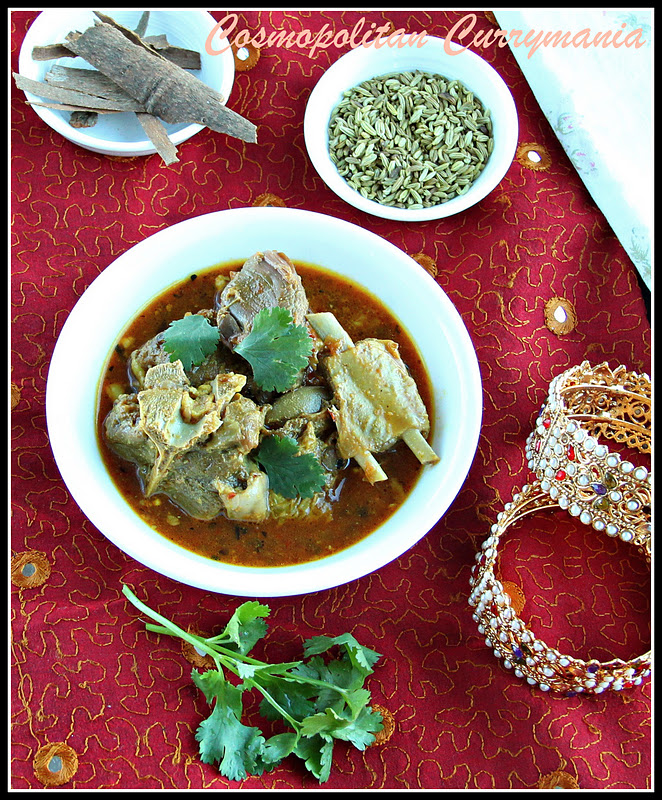
Rogan Josh Kashmiri by Purabi Naha 1

Just like Biryani, this is another royal Indian dish, believed to be introduced in India by the Mughals. In Persian, the word “Rogan Josh” means something which is boiling, hot and red in colour. Rogan Josh is a signature dish in Kashmiri (Wazwani) cuisine and probably, one of the finest meat dishes in India.

Kashmir takes its cuisine very seriously. In fact, I have heard many Kashmiris saying that they regard cooking as a form of art and it is almost like their second religion.

Rogan Josh: Nuances in the Making
The authentic Kashmiri cooks (called wazas) have perfected signature Kashmiri dishes, such as Rogan Josh, with their skills and experience. For them, Rogan Josh is not just a dish, but an extension of their culinary skills in its epitome!

· The oil to be used in making an authentic Rogan Josh is mustard oil. You can replace mustard oil with a mixture of plain oil and ghee if mustard oil is not available.
· Use the freshest and best-quality mutton (meat of a male goat) for this dish. The shank or the shoulder of a male goat have the most succulent meat and are preferred highly in many Indian mutton preparations. The size of the meat pieces should be medium (chopped roughly into two-inch-sized pieces), so that the flavours percolate down the meat very well. Mutton can be replaced with lamb meat. Please note that the meat is never marinated in the traditional Rogan Josh preparation.
· Tomatoes should not be used to prepare Rogan Josh. The rich red colour is from the addition of an indispensable ingredient in this authentic Wazwani (Kashmiri) dish: Kashmiri red chilli powder, which imparts a gorgeous red colour and is mildly hot compared to other red chilli powder varieties. To reduce the hotness even further and still get the same, rich colour in your Rogan Josh, you can mix equal quantities of Kashmiri red chilli powder and paprika.
· The Hindus of Kashmir do not use any onion or garlic in this dish, but use yogurt or curd, fennel powder and asafoetida to impart richness. For the same curry, the Kashmiri Muslims, however, use onions and a special ingredient called maval/mawal, described next.

· An ingredient called rattan jyot/ratan jot ormaval/mawal, which is actually dried cockscomb flower, is traditionally added to the dish (for its deep red colour) at the end by boiling it with equal quantity of water. In addition, saffron dissolved in a little milk is added to give it a subtle enrichment in its flavour. But don’t worry if you don’t get these ingredients: your Rogan Josh will still taste very good without them.

A word about Indian chillies
Just like Mexican and Korean cuisines, Indian cuisine also involves extensive use of chillies. Interestingly, some kinds of chillies are not hot, but just add flavor and colour to a particular dish. Indian cooking makes use of chillies in varied ways to impart distinct tastes and colours. There are a number of dry red chilli (sookhi laal/lal mirch) varieties used in Indian cooking, the prominent ones being the Kashmiri red chillies, the ‘fake’ Kashmiri red chillies (called dubby), single reshampatti, double reshampatti, yellowish red chillies, byadgi, Goan small and pointed red chillies, Guntur red chillies and Nellore red chillies. The good news is that, rogan josh demands the use of Kashmiri red chilli powder, which is just mildly hot!

The traditional Kashmiri Muslim banquet: Wazwan
A feast fit for kings, Wazwan is a grandiose of different kinds of meat preparations and delicacies (prepared traditionally by master chefs called waza). Comprising of almost 36 courses (salute to the royal Kashmiri appetite!), more than half of the Wazwan dishes are meat-based. A traditional Wazwan meal is generally served in group of four, where people sit together and eat from one huge plate. Wazwan, which involves hours of hard work, is an example of Kashmiri hospitality, in which the guest in the house is the first to be served with an array of delicacies

A traditional Wazwani dinner at a Kashmiri household or restaurant involves cleaning the hands with warm water (in a traditional vessel) before anything else. The delicacies include popular names, such as tabak maazrogan josh and rista, along with an assortment of kebabs and vegetable preparations. Finally, another unparalleled meat dish called gushtaba is served, before moving on to the dessert. Phirni is the common dessert cooked here, with rice and milk as the main ingredients. Last but not the least, the Wazwan is never complete without a cup of warm kahwah tea!

In Kashmiri cuisine, the use of curd or unsweetened yogurt (dahi) is very common, as are asafoetida (hing), aniseed (saunf), Kashmiri red chillies, saffron, dry fruits, nuts and dry ginger (saunth).

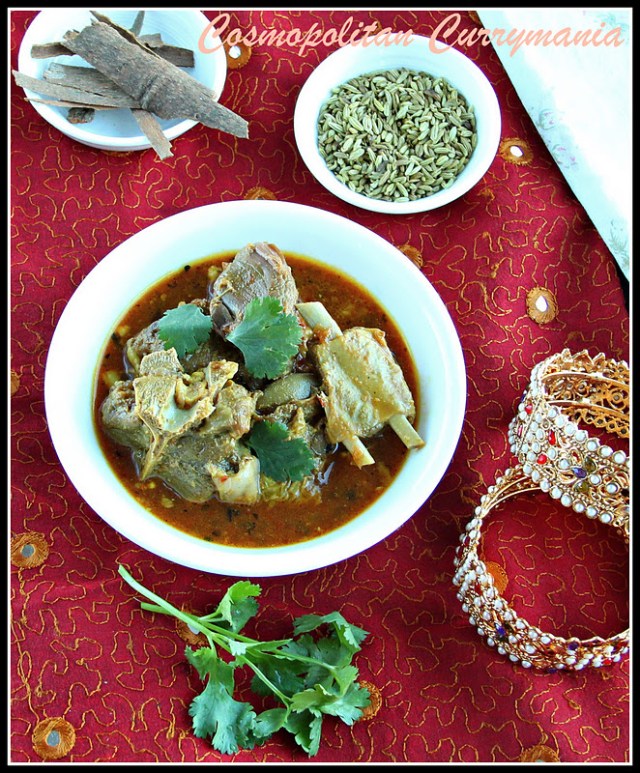
Kashmiri Rogan Josh
Note: This recipe is an amalgamation of Hindu and Muslim ways of cooking traditional Rogan Josh. That is why, both onion and curd are used together. Also, exotic ingredients, such as ratan jot, have been replaced to make it compliant with the global palate.

What you need
• Mutton of a young goat (cut into two-inch-sized pieces, along with bones): 1 kg
• Garlic cloves (finely chopped): 4
• Kashmiri chilli powder: 2.5 tsp
• Curd or unsweetened yogurt: ½ cup
• Shallots (chopped): 250 g
• Mustard oil or a 1:1 combination of any light oil (except olive oil and groundnut oil) and ghee: ¼ cup
• Cloves: 4
• Large, black cardamoms: 2
• Green cardamoms: 5
• Cinnamon: 1-inch stick
• Bay leaf (dried): 1
• Mace: 1 blade
• Coriander powder: 1 tsp
• Fennel powder: 1 tsp
• Dry ginger powder: 1 tsp
• Turmeric powder: ¼ tsp
• Salt (according to taste): 1.5 tsp
• Water: 4.5 cups
• Warm milk: 4 tbsp
• Saffron strands: 8
• Garam masala powder: ½ tsp
• Coriander leaves (chopped): to garnish

How to cook it
1. Boil the mutton (along with the bones) with the garlic, half the salt and water, until the mutton is half done. Remove from heat and strain the stock. Keep the boiled meat aside.
2. Whisk the curd properly with 3 tbsp water and set aside.
3. Mix the saffron with warm milk and keep aside.
4. Fry the shallots in oil, until they are just light brown. Add cloves, bay leaf, cinnamon, cardamoms and the mace and fry for 1 min.
5. Add the coriander, ginger, fennel and turmeric powders dissolved in a little (around 5 tbsp) of the reserved mutton broth. Lower the heat and add the curd to this and stir continuously to avoid the curd getting lumpy (that is why, while whisking, water is always added to the curd).
6. After 5 min, add the boiled meat. Sauté for about 15 min, until the liquid almost evaporates and the sauce coats the mutton well. Add the remaining salt, garam masala powder and the mutton stock and stir thoroughly.
7. Add the chilli powder, cover and boil for 15 more minutes, or till the mutton is soft, yet chewy and the gravy looks thick and creamy. Add the saffron-milk mixture and cook for 5 more minutes, stirring well.
8. Garnish with freshly chopped coriander leaves and serve with pilau, steamed rice, roti or naan.

Courtesy of Cosmopolitan Currymania
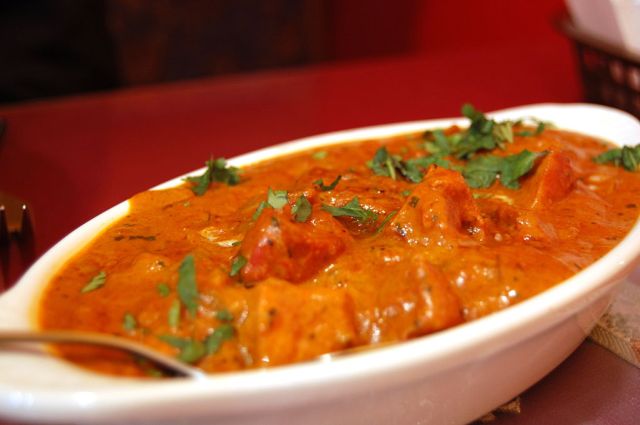
Recipe… Butter Chicken

Butter Chicken (Flicr).jpg

Butter Chicken
Serves 4

What you need
• 1 cup thick yoghurt
• 1 tbsp peeled, grated ginger
• 1 tbsp peeled, grated garlic
• 2 tbsp Tandoori Masala
• 1/4 canned tomato puree (I used tomato paste)
• 2 tbsp lemon/lime juice
• 2 tbsp melted butter/ghee
• 1 whole chicken, cut into 14 pcs. Slit the pieces to allow the marinade to penetrate.

For the sauce
• 4 tbsp butter
• 1 tbsp peeled, grated ginger
• 1 tbsp peeled, minced garlic
• 2 medium tomatoes, finely chopped
• Salt to taste
• 1 green chilli, snipped fine
• 1 tsp Kasuri Methi
• 1/2 cup cream

How you cook it
1. Mix together all the ingredients including the chicken. Cover and let it marinate in the fridge for 1.5 hours.
2. Pre-heat the oven to 400 degrees F and bake the chicken (along with the left over marinade) for 30 mins or until the juices run clear.
3. During the last 15 mins of cooking you can start with the sauce.
4. In a large pan, on medium heat, melt the butter. Add the ginger and garlic and saute for 30 secs.
5. Add in the chopped tomato and cook for 10 mins, mashing it up with the back of your spoon as you go. By the end of 10 mins you should have an orange sauce with hardly any pieces of tomatoes to be seen.
6. By now the chicken would have been cooked to perfection.
7. Add the chicken, the remaining marinade, salt, chilli and fenugreek leaves. Simmer, covered, for 10 mins
8. Add the cream and simmer for a minute then serve hot!

Recipe courtesy of Indian Tiffin, the site for spice tins, organic spices and teas, roti kits and other curry utensils.

Photo: stu_spivack (Flickr)

Recipe… Bunny Chow with Chicken Curry

Right, now let’s get stuck in…

Bunny Chow with Chicken Curry
Serves 2

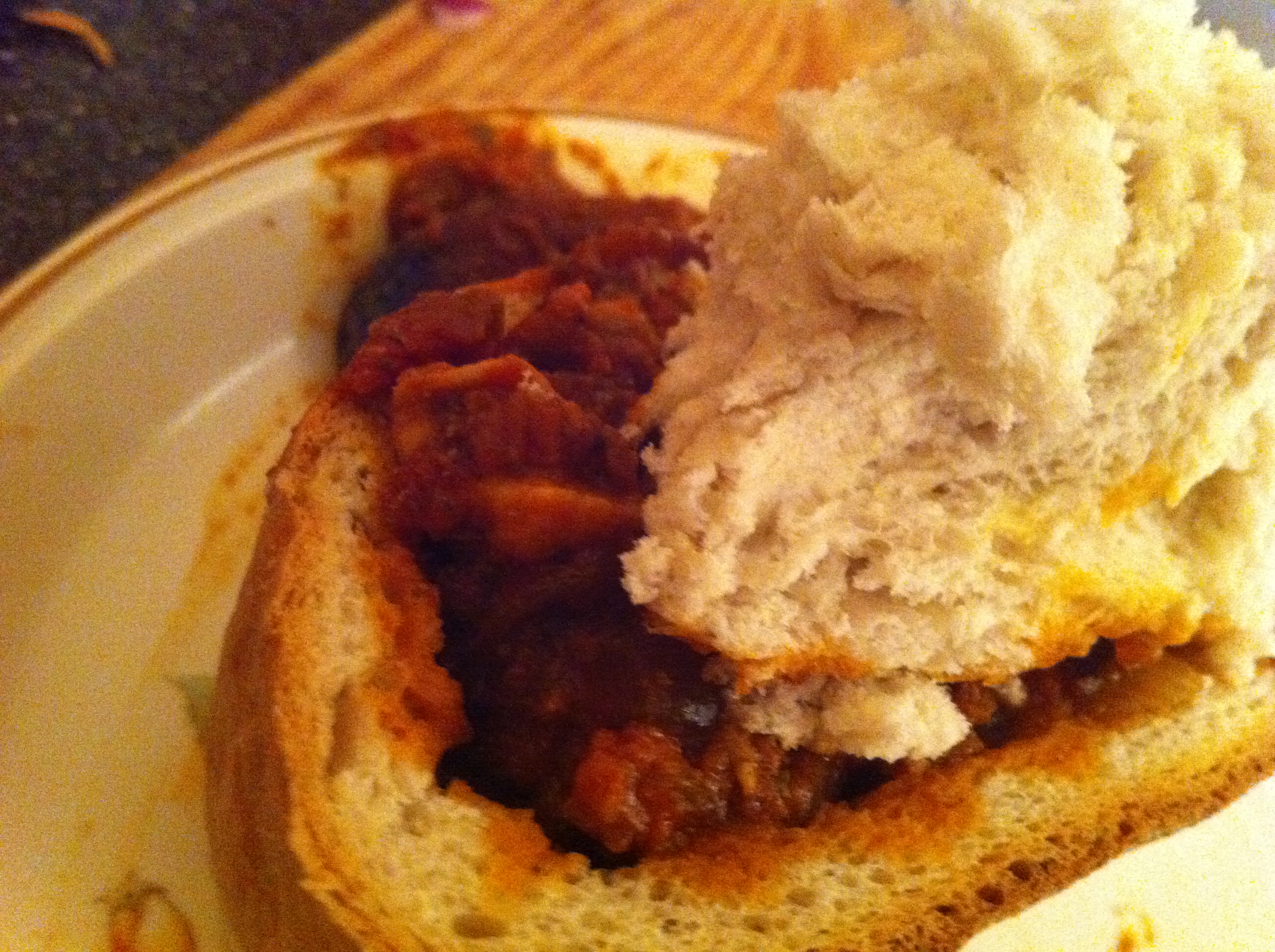
It’s simple, it’s rustic and it’s tasty… it’s a bunny chow! You’ll find someone selling them on every street corner in Durban, South Africa. Ideal for that steamy tropical climate, yet also great comfort food as the winter approaches in London. Cut off the bottom of a loaf, scoop out the white stuff leaving a crust shell. Fill with hot chicken curry (don’t forget the sauce now), settle down and use the bread you scooped out to mop up and eat your curry. No cutlery permitted.

Durbanite and bunny chow lover Richard says bunnies are best eaten sitting cross-legged while staring at the Indian Ocean with a bottle of ice-cold Coke by your side.

What you need
• 1 loaf of bread (it is best to use a loaf that has been left a day since buying it)
• 1/2 recipe Handi Chicken

How to make it
1. Cut the loaf in half and scoop out the bread
2. Fill each hollowed out loaf with the chicken